
 Published by Spine & Sport Center | Dr. Shane Conrad, DC
If you've ever sat in a dark room with a cold cloth on your forehead, cursing the existence of bright lights and human conversation, you already know that headaches are no small inconvenience. A bad headache can turn a perfectly good Friday into the worst kinda of Monday.
For millions of people, the standard “treatment” is the same: take your meds and hope for the best.
If you’re tired of popping pills and want a more permanent solution, then might I recommend Chiropractic? For 25 years, I’ve been in the trenches helping my patients reclaim their independence from chronic headaches and migraines. Let me tell you how I do it:
First, You Need To Understand What's Actually Going On
Not all headaches are created equal, and understanding the types of headaches and their mechanisms can help you choose the appropriate intervention.
Tension headaches are the most common type and are characterized by a steady muscular “pressure or tightness”. You'll feel like you are wound up like a jack-in-the-box that doesn’t pop! Tension Headaches usually occur in the neck, upper back, and base of the skull, and they have a particular fondness for people who spend long hours at their computer, slouching on the couch, or staring down at their phone screen. (Don’t pretend that isn’t you!)
Cervicogenic headaches (neck-related headaches) originate from a dysfunction in the cervical spine — the joints, muscles, and nerves of the neck. These headaches often come from the neck itself and can radiate upwards into the skull or down into the shoulder blades. They can be frequently misdiagnosed as tension headaches, as their symptom profiles do overlap.
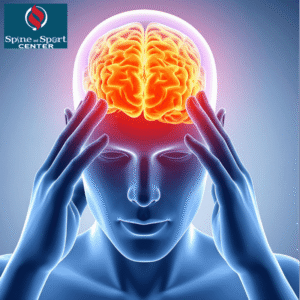
Migraines are a neurological condition involving changes in brain chemistry, blood flow, and nerve signaling. Severe, one-sided head pain that's pulsatile in character and occurs with sensitivity to light and sound, nausea, and/or visual disturbances is the most common presentation. There is growing evidence that migraines can be triggered by cervical spine dysfunction and that treating the neck can meaningfully reduce both the frequency and severity of migraine episodes.
Do you see the common thread? Let me give you the answer: it’s the cervical spine. In the vast majority of headache patients we see, the neck is a BIG part of the problem. That means that it can also be a BIG part of the solution!
What can a Chiropractor do for Headaches?
Multiple clinical trials and systematic reviews have demonstrated that spinal manipulation of the cervical and upper thoracic spine produces meaningful reductions in headache frequency, duration, and intensity for both tension headaches and migraines. In fact, it is one of the most supported applications of Chiropractic adjustments in medical research.
But at the Spine & Sport Center, we don't stop at adjustments. We use an integrated, passive care approach that addresses all the factors contributing to your headaches simultaneously. Think of it less like a single instrument and more like a well-rehearsed band. Joints, muscles, and nerves all function in perfect harmony. The end result is no more headaches (or at least a drastic change in your headache presentations).
Headache and Migraine Care: The Three Pillars
Chiropractic Adjustments: The foundation of care.
When the joints of the cervical spine aren't moving properly, they become a source of persistent irritation to the surrounding nerves, muscles, and connective tissue. This drives both tension headaches and neck-related headaches. The upper cervical spine (the region just below the skull) has an extraordinarily dense concentration of sensory receptors that feed directly into the brainstem and the trigeminal nerve system, which is the driving mechanism in some migraines.
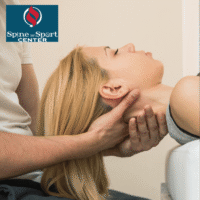
Specific chiropractic adjustments to the cervical and upper thoracic spine restore proper joint motion, reduce mechanical irritation to the nervous system, and create changes in the way the brain processes pain signals from the neck. Patients report reductions in headache pain after treatment, and a noticeable decrease in the overall tension they carry in their neck and shoulders.
For cervicogenic headaches specifically, chiropractic manipulation is considered a first-line treatment recommendation in international clinical guidelines. That's not my opinion; that's the research.
Therapeutic Massage: It just makes sense.
If the cervical spine is the structural root of most headaches, the muscles are its accomplices. The suboccipital muscles at the base of the skull, the upper trapezius, the levator scapulae, and the sternocleidomastoid are among the most chronically overloaded muscles in the modern human body. And yes, your terrible posture is DEFINATELY to blame! These tight, overactive muscles will develop trigger points that refer pain into the head and amplify the headache symptoms. Talk about a pain in the neck!
Therapeutic massage and targeted soft tissue therapy address this directly. Through myofascial release, trigger point therapy, and manual mobilization of the restricted tissues, we reduce the muscular tension that feeds the headache cycle.
There is also something worth acknowledging here that science increasingly supports: the simple, direct therapeutic effect of hands-on care on the nervous system. Skilled soft tissue therapy activates the parasympathetic nervous system, reduces cortisol, and creates a genuine physiological calming response in the body. For migraine sufferers, whose nervous systems are often running in a state of chronic hypersensitivity, this is no small thing.
Many of our headache patients find that regular soft tissue therapy, as part of an ongoing care plan, becomes one of the most powerful tools in their migraine management toolkit — not just for treating episodes when they occur, but for reducing the baseline tension that makes them more likely to occur in the first place. This is precisely why many of my worst headache sufferers rely on the combination of Chiropractic Adjustments and massage therapy to best control their symptoms.
Acupuncture and Dry Needling: the secret weapon.
If chiropractic manipulation is the most researched headache treatment in our toolkit, acupuncture is the most under-appreciated. A landmark series of clinical trials published in major medical journals has found that acupuncture is at least as effective as preventive medication for migraine relief — with considerably fewer side effects. For tension headaches, the evidence is similarly strong.
At Spine & Sport Center, we use both traditional acupuncture and a technique called dry needling (a Western clinical adaptation that targets specific trigger points and dysfunctional muscle tissue using the same acupuncture needles).
Dry needling applied to the suboccipital muscles, cervical paraspinals, upper trapezius, and related areas produces a local twitch response in tight muscle fibers, immediately reducing tension and altering the pain signaling from those tissues to the nervous system. The effect on headache patients can be profound. Many patients carry a baseline tension in the back of their neck and report that dry needling creates the best release of this tension.
From a neurological standpoint, needling works in part by stimulating large-diameter nerve fibers that suppress pain signals at the spinal cord level. That relief you feel isn't just local muscle relaxation. It's a genuine shift in how the nervous system is processing pain.
The Integrated Approach - Any Single Therapy
Tension headaches, cervicogenic headaches, and migraines all involve the same fundamental problem: restricted spinal joints, irritated nerves, overworked muscles, and a nervous system that is amplifying pain.
Chiropractic adjustments address the structural joint component. Soft tissue therapy focuses on the soft tissues. Dry needling resets the neuromuscular interface and the pain processing system. When combined, they create a treatment summation: each modality supports and enhances the others. And the combined effect is substantially greater than any single approach alone.
Is Our Approach Right for You?
If you identify with any of the following, we'd love to talk:
Do you get headaches more than once a week, or do they significantly interrupt your life when they occur? Do your headaches start in the neck or base of the skull? Have you been managing migraines with medication and would like to reduce your reliance on it? Maybe you've tried Chiropractic care before but didn't experience lasting results. Why not give us a try?
Mild headaches are common and a normal nuisance for most of us. But chronic, untreated headaches that steal joy from our daily life are something none of us have to endure. There are options for you! Let us help you regain control of your head pain and stop letting your headaches run your life.
Let's Get Your Head In a Better Place
At Spine & Sport Center, we take headaches seriously because we know how they affect every part of your life. Our integrated approach to migraine relief, tension headaches, and neck-related headaches is built on real clinical evidence and decades of clinical experience. It's designed to do more than just manage symptoms. It identifies the source of your problem and works on managing it in an effective, drug-free manner.
Your next headache-free week starts with one phone call.
Frequently Asked Questions About Headaches, Migraines, and Chiropractic Care
If this topic resonated with you, we can help you take the next step. Are you ready to work with professionals who truly understand the science behind your obstacles? We'd love to get you started on the path to recovery.
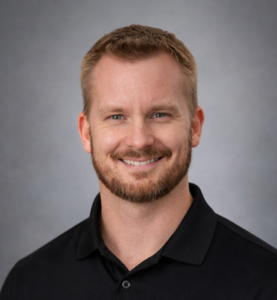 Dr. Shane Conrad DC, DAc, DACBSP, BPE
Sports Chiropractor | Clinical Director Spine & Sport Center
Dr. Conrad is a board-certified Chiropractic Sports Specialist. Dr. Conrad specializes in the intersection of neuroscience, musculoskeletal rehabilitation, and sports performance. His integrated approach combines precision chiropractic adjustments, soft tissue therapies, dry needling, and evidence-based rehabilitation. Care should be built on the science of how the nervous system, fascia, joints, and muscle tissue work together to create optimal human movement and pain-free living.
Instagram: @dr.shane.dc
Website: spineandsportscenter.com
Address: 5928 Stetson Hills Blvd, Suite 100 | Colorado Springs, CO 80923